
Snake Whip
Definition
A snake whip is a flexible single-tail whip without a rigid handle, designed for speed, control, and fluid movements. Unlike the signal whip, a snake whip does include a separate fall, an extra leather section to which the cracker is attached. In BDSM, the snake whip is used for impact play, precision work, rhythmic scenes, and building mental tension.
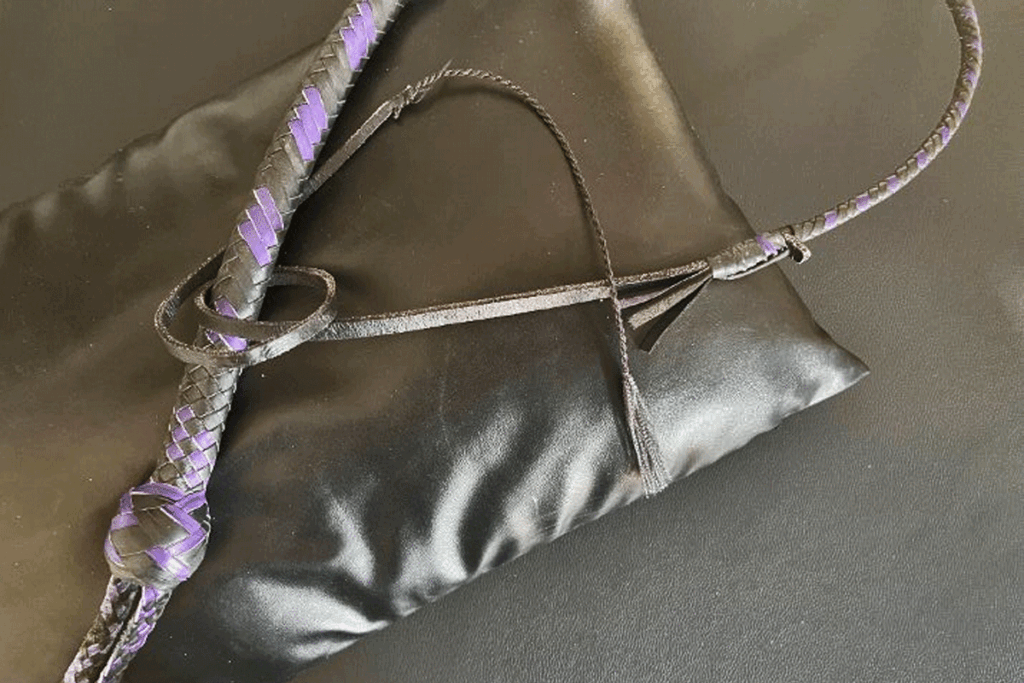
Explanation of the snake whip
The snake whip belongs to the family of single-tail whips and is known for its supple, almost serpentine movements. That is where its name comes from. Because the whip does not have a rigid handle, the entire whip moves as a single flexible unit in unison with the user’s arm and wrist.
Snake whips are often used in whip cracking, performance art, and BDSM. Due to their flexibility and relatively compact size, they are suitable for smaller spaces than, for example, large bullwhips. At the same time, they can reach tremendous speeds, making both the sound and the impact intense.
Detachable fall
An important difference from the signal whip is the presence of a fall. This detachable leather piece sits between the body of the whip and the cracker. This makes it easier to replace the cracker when it wears out. The fall also gives the snake whip a slightly different dynamic in terms of movement, feel, and energy transfer.
Within BDSM, the snake whip is often valued for its combination of elegance, tension, and precision. The sharp cracking sound alone can evoke a great deal of anticipation and mental tension. For some submissives, it is precisely this psychological element that forms an important part of the experience.
Usage
In addition, the snake whip can be used for: Due to its graceful movements and technical difficulty, the use of snake whips is viewed by many as a craft or art form within BDSM. Traditional snake whips are often made from kangaroo leather because of the material’s strength and flexibility. Modern variants are also made from nylon or paracord.
- Precision impact play
- Rhythmic whipping scenes
- Fear play
- Demonstrations and performances
- Sensory play
- Control and focus play
Safety & Considerations
Although a snake whip often appears elegant and controlled, it remains a potentially dangerous instrument. The speed of the tip can cause painful welts, bruises, cuts, and, in severe cases, permanent injuries. The eyes, face, throat, and joints are particularly vulnerable areas that require great caution.
A snake whip therefore requires technique, practice, and body control. Many experienced users first train extensively without a partner, for example by practicing on targets or objects. Learning to control distance, timing, and force is essential before the whip can be used safely.
The environment also plays an important role. Even a relatively short snake whip needs space to move safely. In small spaces, there is a risk of hitting walls, furniture, or bystanders if someone lacks sufficient control.
Within BDSM, safe use is not only about technique but also about communication and trust. A submissive must know what is going to happen, boundaries must remain open for discussion, and signs of tension or uncertainty deserve attention. Precisely because single-tail whips can have a significant psychological impact, good communication remains just as important as physical safety.
Related terms snake whip
Bullwhip
Signal whip
Single-tail
Whip
More information
Encyclopedia
Letter S
Where should you hit, and where should you avoid hitting?
