
Lifestyle
Definition
Within BDSM, the term lifestyle refers to a way of life in which BDSM is not just a game or sexual preference, but an essential part of a person’s identity, values, and daily experience. A lifestyleDom(me) or lifestylesub experiences the D/s dynamic not only in the bedroom, but also in attitude, communication, and energy outside of play.
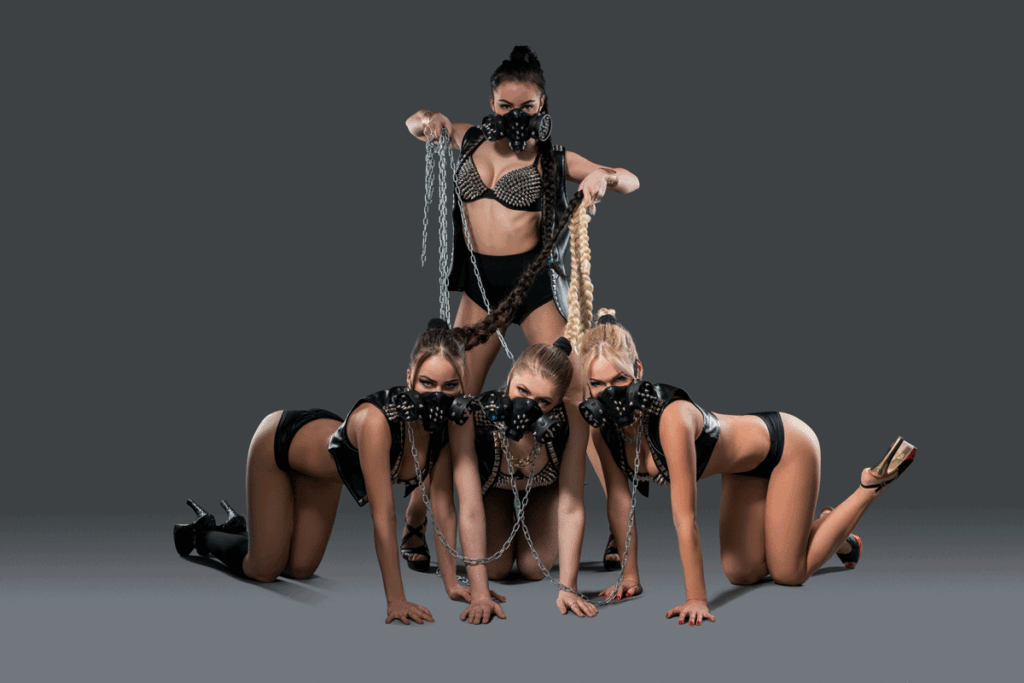
Explanation of lifestyle
Whereas for some, BDSM is limited to agreed sessions or experiments, for lifestyle practitioners it is a natural extension of who they are. It is not a role they ‘take on’, but a way of feeling, thinking, and relating. A lifestyle Dominant naturally experiences leadership, responsibility, and structure as part of his or her personality. A lifestyle sub, on the other hand, finds peace, surrender, and fulfillment in following, serving, or letting go of control. This dynamic does not have to be explicitly present all the time, but is often felt in subtle gestures, words, or energy between the two.
In a lifestyle relationship, rituals, clothing, symbols, or daily agreements can contribute to strengthening the connection. Think of wearing a collar, a specific greeting, the use of titles such as “Mistress,” “Madam,” “Sir,” or “Master,” or fixed moments of reflection or play. Such elements create recognition, stability, and depth in the relationship.
Lifestyle BDSM is not bound to a 24/7 structure, although some couples do choose this. It is important that the dynamic is authentic and suits the natural nature of both partners. It is not about outward appearance or displays of power, but about the inner balance between power and surrender – a dynamic that often says more about trust and love than about sex or pain.
Safety & points of attention
Lifestyle BDSM requires a high degree of self-knowledge, maturity, and mutual transparency. Because the dynamic becomes part of everyday life, boundaries can easily become blurred. It is therefore essential to keep agreements clear, evaluate them regularly, and give each other space for personal growth outside of the roles.
A healthy lifestyle relationship is based on voluntariness, consent, and equality – even if the roles are unevenly distributed. When the power dynamic is abused or one partner loses their autonomy outside the agreed-upon framework, lifestyle turns into control or dependence. Psychological safety and communication therefore remain the foundation.
In addition, it is important to distinguish between lifestyle and obsession. A balanced D/s lifestyle enriches life, but should not dominate it. True connection only arises when both partners can be themselves completely, with their dominant or submissive nature, but without losing each other.
Related terms lifestyle
24/7
BDSM
Complete Irrevocable Submission
D/s relation
Femdom
OWK
PER
Power Exchange Relationship
Total Power Exchange
TPE
More information
