
Flexible restraints
Definition
Flexible restraints are bondage aids that restrict the body using flexible materials such as rope, leather, nylon, fabric, or silicone, whereby the restraint adapts to the shape and movement of the body.
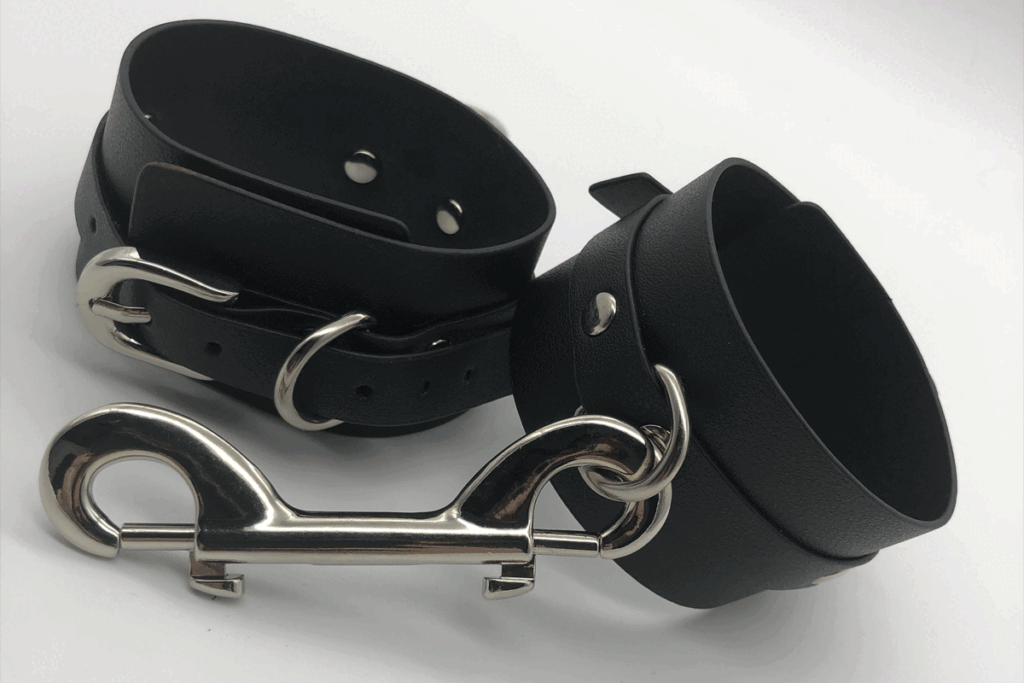
Explanation of flexible restraints
Within BDSM, the term flexible restraints refers to all forms of restraint that do not consist of a single rigid construction. Unlike rigid aids such as a spreader bar or fiddle, flexible restraints move with the body.
Examples include rope (as in shibari), leather handcuffs, Velcro cuffs, nylon straps, or adjustable wrist and ankle cuffs. The most important feature is that the connection between the bound body parts remains flexible. This results in:
– A more natural body posture
– Greater range of motion within the restraint
– Fewer direct pressure points
– More playfulness and dynamism
Flexible restraints can be used both lightly and intensely. A loose wrist cuff with a long chain allows freedom of movement, while tightly applied rope can create very limited mobility.
They are often used for temporary fixation, positioning, or aesthetic bondage.
Safety & points of attention
Although flexible restraints appear less rigid, they are not automatically safer.
Important points of attention are:
– Blood circulation: ropes or cuffs that are too tight can restrict blood flow.
– Nerve compression: nerves are located close to the skin, especially at the wrists, upper arms, and upper legs.
– Risk of cuts: safety scissors should always be readily available when using rope bondage.
– Choice of material: synthetic rope can cause burns due to friction.
– Prolonged restraint: even flexible restraints can cause muscle cramps or tingling during long sessions.
Flexible does not mean risk-free. Regular checks of color, temperature, and sensation in the limbs are essential.
Difference from rigid restraints
Flexible restraints move with the body and distribute tension across multiple points. Rigid restraints force a fixed position and mechanically restrict movement. Flexible restraint is often chosen for:
– Shibari and decorative bondage
– Movement play with limited freedom
– Long sessions where comfort is important
Rigid restraint is more often used for strict immobilization or power exchange with minimal freedom of movement.
Related terms flexible restraints
More information
