
Rope
Definition
Rope within BDSM is specially selected and processed cord material used for bondage, decorative bindings, or full suspension. The most commonly used materials are jute, hempex, hemp, and cotton. Each material has its own structure, strength, smell, flexibility, and safety requirements.
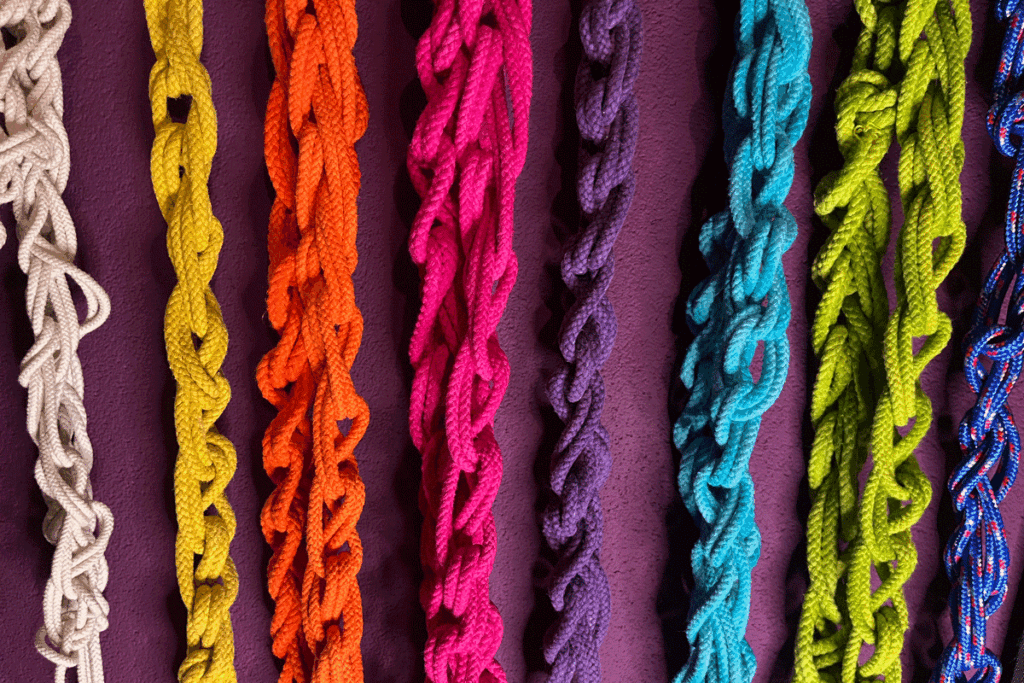
Explanation of rope
Rope is a world unto itself within BDSM and shibari. The material you choose determines not only safety, but also the experience. Jute is light, lively, fast, and has a natural scent and “bite.” Hemp is slightly heavier, oilier, and feels fuller in the hands, with warmer friction. Cotton is soft, supple, and ideal for beginners or people who are sensitive to rough fibers, although it is less suitable for complex or heavy suspension.
Hempex, a synthetic rope similar to hemp, is strong, durable, and easy to keep clean, but lacks the natural friction and liveliness of real fibers, making it less suitable for traditional shibari. A good rope lies firmly but comfortably in the hand, glides smoothly without slipping, and feels stable on the skin.
Riggers (binders) usually work with ropes of 6 to 8 meters per strand for decorative bondage, and longer ropes for complex harnesses. For suspension, the quality of the material is crucial. Jute and hemp are almost always the choice of experienced riggers because they are light, strong, and predictable. Cotton and synthetic variants are too stretchy or too heavy to reliably bear weight.
Rope used for bondage is often treated first: burned, oiled, knotted, stretched, and combed. This makes the rope safer, softer on the skin, and easier to handle when knotting.
Safety and points of attention
Safe rope use starts with the material. For floorwork (non-suspension bondage), almost any high-quality 6 mm rope can be used. For suspension, 6 mm jute or hemp is almost always used, because this thickness offers the best balance between strength, grip, and knot stability.
Thinner than 6 mm is too sharp for the skin; thicker than 6 mm quickly becomes cumbersome and difficult to handle. Suspension also requires multiple lines: the sub’s weight should never hang on a single line.
Riggers use at least three double lines to carry weight.
Watch for wear and tear: rope that has become fibrous, dry, damaged, flat, or uneven should be replaced.
Avoid pulling on nerve-rich areas such as the upper arms, groin, flanks, and wrists, as nerve damage can occur very quickly.
Always keep safety scissors that can cut through rope within reach.
Rope should never be used when wet, as wet rope is less strong, wears out faster, and pulls unpredictably.
When performing suspension, the rigger must be 100 percent confident in their knowledge, technique, anatomy, and safety procedures; an incorrect line can cause permanent damage.
Types of materials
Jute: Light, fast, rougher, ideal “bite.” Requires treatment (burning, oiling, breaking). Suitable for experienced binders and suspension.
Hemp: Slightly heavier, fuller, warmer texture. Less springy than jute. High load capacity. Ideal for both floorwork and suspension.
Cotton: Soft, beginner-friendly, readily available. Not suitable for suspension due to stretch and limited strength.
Synthetic rope (nylon, polypropylene): Colorful, smooth, easy to clean. Not suitable for traditional shibari or suspension because knots slide more easily and friction is low.
Rope preparation (conditioning)
New jute or hemp rope almost always needs to be conditioned: singed to remove loose fibers, oiled (e.g., with jojoba) to make it supple, stretched to remove tension from the rope, and knotted to shape it. Well-conditioned rope feels warm, lively, and reliable in your hands. Cotton usually does not need to be conditioned.
Maintaining and cleaning rope
Rope that is used intensively absorbs oils, sweat, and odors. Jute and hemp cannot be washed in the washing machine; this breaks the fibers. You can air them out, lay them in the sun, steam them from a distance, or treat them carefully with a disinfectant spray that does not damage the fibers.
Cotton can usually be washed at low temperatures, although it may become fluffy or softer over time.
Never use rope that has been stored in damp conditions; mold in rope is invisible but dangerous. Store rope in dark, dry areas, ideally rolled up and kept together in sets.
Thickness recommendations
Floorwork: usually 6 mm, sometimes 5 mm for detailed work.
Suspension: always 6 mm high-quality jute or hemp.
Decorative bondage: 6–8 mm, depending on style and preference.
Related terms rope
Bondage
Bondage frame
Bunny
Hempex
Hemp rope
Hogtie
Japanese bondage
Jute
Kinbaku
Panic hook
Rigger
Rope bunny
Self bondage
Shibari
Snap hook
More information
