
Pain threshold
Definition
The pain threshold is the point at which pain shifts from being pleasant, challenging, or exciting to being too intense, harmful, or mentally overwhelming. In BDSM, it refers to the maximum intensity of pain that a person can safely endure, both physically and emotionally.
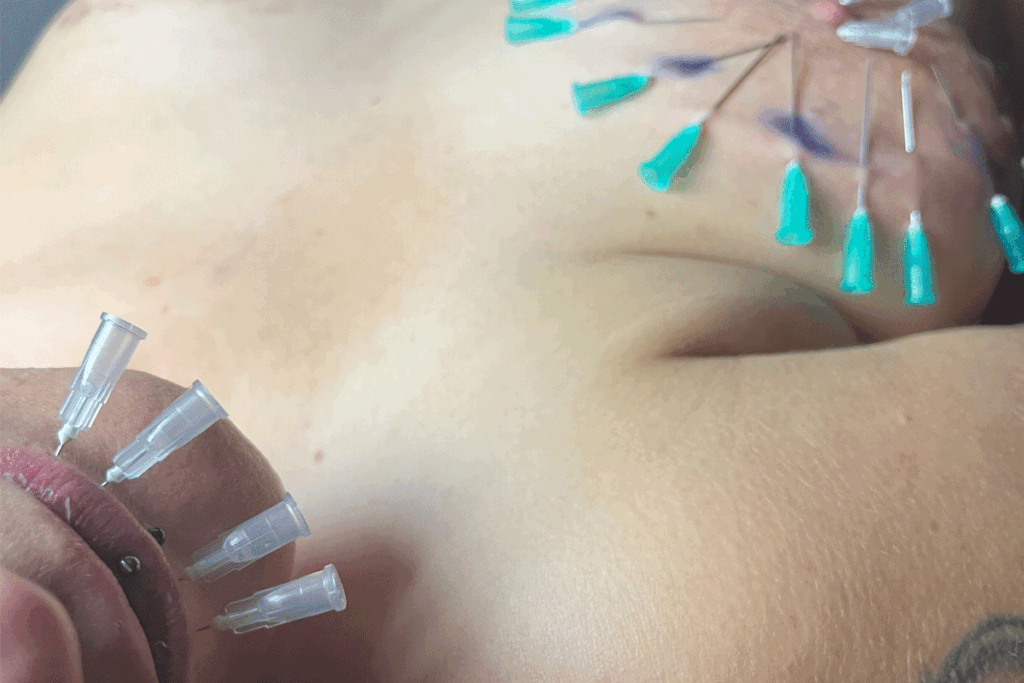
Explanation of pain threshold
Every sub has their own pain threshold. It is not a fixed point, but a dynamic area that shifts due to factors such as experience, emotional state, daily form, trust in the Dominant, hormones, energy level, mood, and the atmosphere during a session. What feels good one day may be completely different the next session. The pain threshold is fluid and therefore not a competition or proof of “how good you are as a sub,” but a valuable tool within the game.
For many subs, pain plays a role in surrender, tension, endorphin build-up, and emotional release. Some subs even experience the build-up to their pain threshold as a kind of meditation: the world falls away, the body becomes still, and the pain connects them to their Dominant. For Dominants, learning to read and monitor the pain threshold is an essential part of responsibility, craftsmanship, and loving dominance. You don’t play to break boundaries, but to respect them – and sometimes gently stretch them, always with mutual trust and consent.
The pain threshold lies not only in the body, but also in the mind. A sub may still have physical space while mentally reaching their limit; conversely, a body may block more quickly when emotional safety is lacking. That is why communication, both verbal and nonverbal, plays a major role in recognizing this point.
Safety & points of attention
Respect signals such as cramping, stillness, irregular breathing, nausea, dissociation, or tears without emotional expression. These can all indicate that the pain threshold has been exceeded.
Work with a safe word or signal, but don’t rely on it alone. Not every sub can speak clearly in the moment or is able to act adequately and/or clearly.
Build up pain slowly, so that the body has time to release endorphins and warm up the skin. Sudden hard blows without warming up increase the risk of physical damage.
Recognize the difference between desired and undesired pain play. A sub who grits their teeth because it is exciting plays differently than a sub who loses connection.
Be aware of dangerous areas of the body, such as the kidneys, spine, abdomen, neck, and joints. Pain is no excuse to ignore medical risks.
After the session, check for bruises, swelling, heat, or numbness. Exceeding the pain threshold can also have physical consequences later on.
Provide emotional support, because reaching a pain threshold can lead to an endorphin rush, crying, softening, but sometimes also to a dip (subdrop). Aftercare is always part of the process.
Related terms pain threshold
Bad pain
Endorphin
Erotic pain
Good pain
Impact play
Painslut
Subdrop
Subspace
ZZZ Experience (SSS Experience)
More information
